
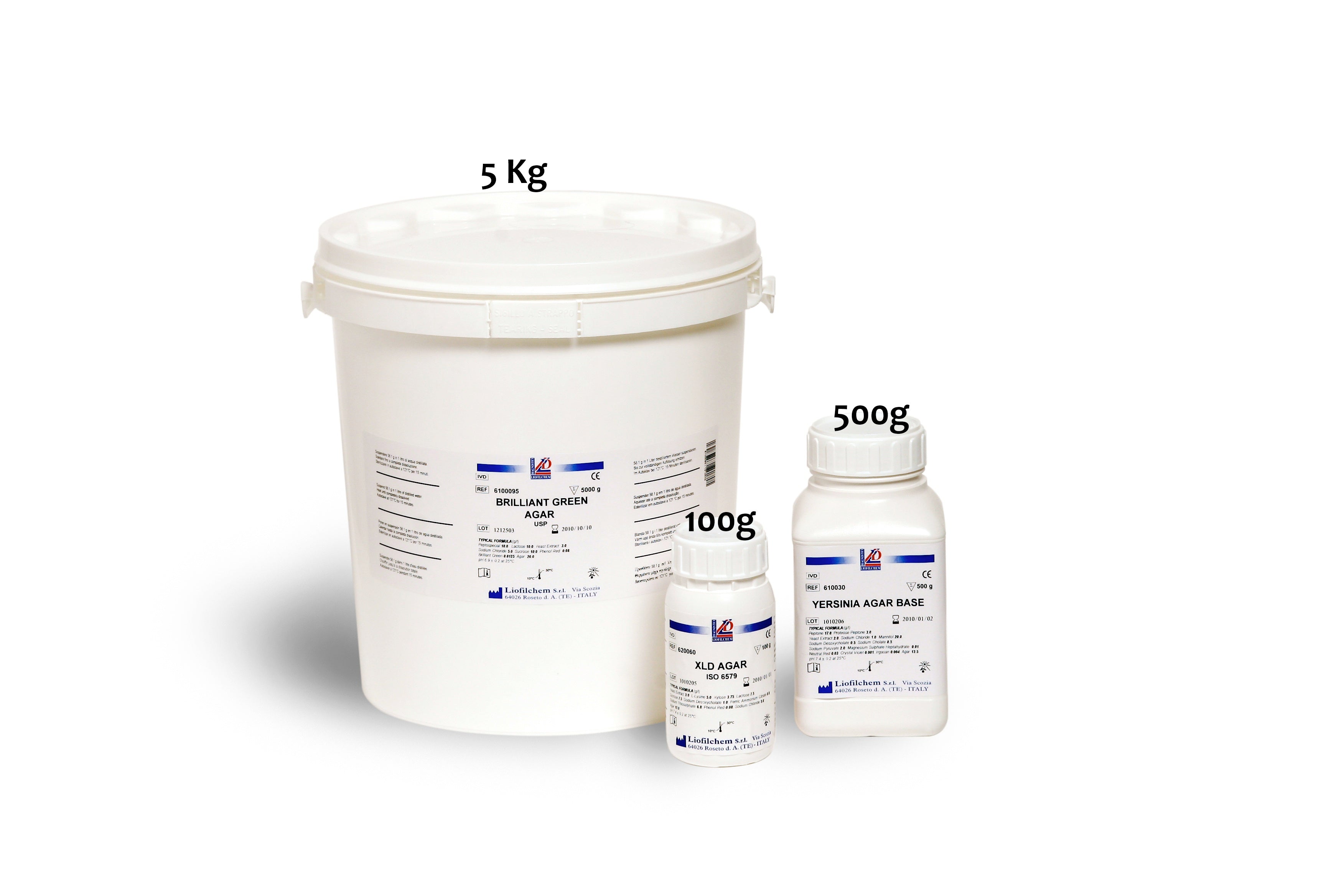

Description
Selective medium for the isolation and cultivation of mycobacteria.
Description
Middlebrook 7H11 Agar Base is a medium used with supplements for the selective isolation of Mycobacterium spp., especially Mycobacterium tuberculosis, from clinical specimens, as well as for the cultivation of pure cultures of mycobacteria. This agar-based medium provides improved susceptibility testing compared to media based on coagulated egg (Löwenstein formulations), where drugs may be more easily inactivated.
Principle
Pancreatic digest of casein provides nitrogen, vitamins, and amino acids for the growth of fastidious strains of M. tuberculosis. Glutamic acid, sodium citrate, pyridoxine, biotin, and ammonium sulfate supply growth factors. Ferric ammonium citrate and magnesium sulfate are sources of trace ions. Phosphates help maintain the pH of the medium. Malachite green is the selective agent inhibiting contaminant microbial flora, and also serves as a pH indicator. Agar is the solidifying agent. The base is enriched with Glycerol Supplement (ref. 80021) and Middlebrook 7H10 (OADC) Supplement (ref. 81035), containing oleic acid, albumin, glucose, catalase, and sodium chloride: glycerol and glucose are energy sources, sodium chloride maintains osmotic equilibrium, albumin protects the tubercle bacilli against toxic agents, catalase destroys toxic peroxides that may be present, and oleic acid is a fatty acid utilized by mycobacteria.
Preparation
- Suspend 20.5 g of powder in 900 mL of deionized or distilled water containing 5 mL of glycerol
- Bring to a boil and shake until completely dissolved, then sterilize at 121°C for 15 minutes
- Cool to 45–50°C
- Aseptically add 100 mL of Middlebrook 7H10 (OADC) Supplement
Technique
Follow the applicable reference method for your laboratory. Keep plates and tubes shielded from light and incubate at 35 ± 2°C for up to 8 weeks in an aerobic atmosphere enriched with 5–10% carbon dioxide.
Interpretation of Results
Examine weekly for growth, pigment production, and colony morphology, and carry out identification tests per established laboratory procedures. Note that negative culture results do not rule out active mycobacterial infection. Factors that may lead to unsuccessful cultures include: the specimen not being representative of the infectious material (e.g. saliva instead of sputum); mycobacteria being destroyed during digestion/decontamination of the specimen; gross contamination interfering with growth; or inadequate aerobic conditions and CO₂ tension during incubation.
Storage & Shelf Life
Dehydrated medium: store at 10–30°C. Shelf life: 4 years.
Manufacturer catalogue code: 610213.
Payment & Security